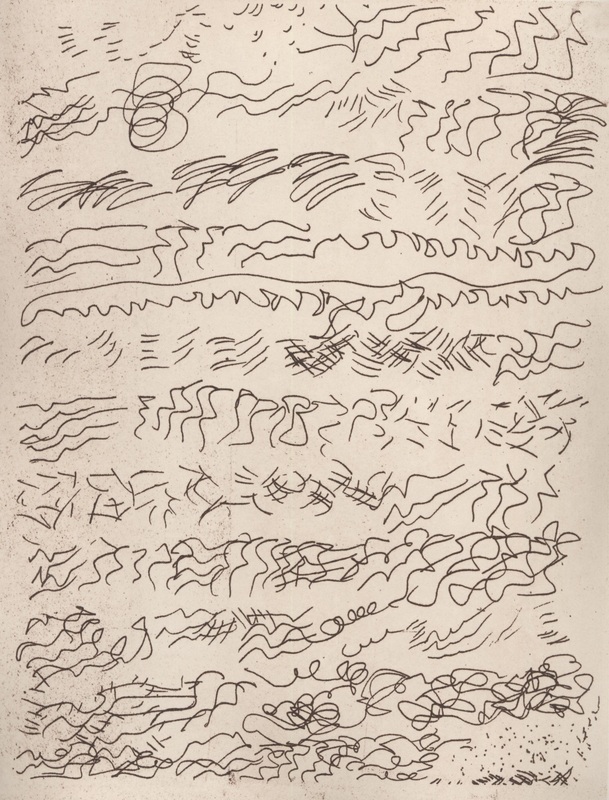
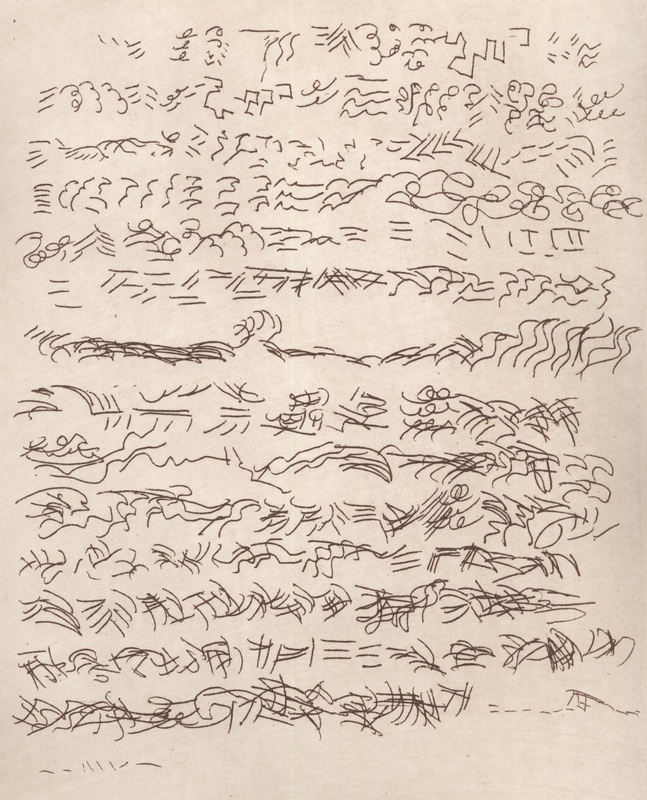
Here in Mingus' hometown the LA Philharmonic etc. is celebrating the centenaries of Lutoslawski and Cage. But all I hear is Mingus like a baby brother rambunctious from the jump rattlin' and stompin' for his. Because what Cage did for silence and Zen and chance Charles was on for the kind of swing that defines nations. Some nations don't like their definitions or their origins or their history of atrocities but he put swing in.
Antibes, O "Folk Forms" - Doesn't that… Isn't that… ? Accurate. What would Luto do or say or raise or hand this younger Mingus - worthwhile outburst - for the sake of hell in school and other places. Paraphrasing a bandmate from the bandstand at UCLA 1965 Mingus notes "all of a sudden you find yourself trapped but you blame it on other people".
Dissect, transcribe and melodize The place of unconfinement. His music is What music does Let's go out and in and find it.
* * * *
Andrew Choate was born and raised in South Carolina and studied music and literature at Northwestern University and the California Institute of the Arts. His first book, Langquage Makes Plastic of the Body, was published by Palm Press in 2006. His most recent book is Stingray Clapping, published in 2012 by Insert Blanc Press. He has been publishing his writings on music and art since 1999; these have appeared in Urb, Coda, The Wire, Signal to Noise, Art Ltd, d’Art International and Facsimile. His writing has been translated into Spanish, French, Hungarian and Czech. His radio plays and sound works have been broadcast on WDR in Germany, Radioarte Mobile in Italy, Hipersônica in Brazil, Resonance FM in England and various outlets in the US. His visual work has been exhibited at the Yerevan Center for Contemporary Art, the Torrance Art Museum, Pomona College Museum of Art, Barnsdall Art Park, High Energy Constructs and the Overca$h Gallery. He has given lectures at the Museum of Contemporary Art in Los Angeles ("Picturing Language"), CalArts ("Writing for Video Performance") and Hofer's Studio Roof ("I'm Turning Sideways In This Crowded Train So You Can More Easily Pass Me By"). His current projects include a graphic novel made of photographs and narration called 260 Aquariums and a series of stress balls in the shape of desktop computers painted with text and installed and photographed in domestic interiors.
| Music spins faster then my head. A rift of bebop Spanish caravan danc’n in da streets ta da Afra-Rican inspired Beat. A voice breaks celebrating da goddess of Green suffocation. Key board play a flat tone death ta invisible asphyxiation. Turns da need Of green ta Blue. Ah this lady does not sing da blues. Unnecessary, what is needed comes ta me through da staccato of life. Da horn flutters amidst da scattered drum beats and bass strings me along in an all consuming stomp. Happy floats across da room. Flute thrills like spring birds after da rain that brought da worm out upon da sidewalk. Birds yell at me with awks when I disturb their feast. I say excuse me bro bird, I did not mean ta interrupt your fine repast. The worm wiggled gratefully into da turf. Smooth moves, anxiety on da side high point blowing that horn. Float away on a cascade of emotion. Niagara clashes Roller coaster dips white water rafting over the notes in da shallows. Dragon flies hover serene as they inch forward quietly. Camouflaged army crawls—soon to become Vermillion. Sounds clash discord. Unidentifiable body Floats in strange waters—a mother’s loss. She sits a matriarch. Elegant and angry at what she can’t change. The music screams her pain. Spanish Madonna crucifies me alive with her eyes. I offer only love. Distant as Death, my other chile, burnt offerings. Sidewalk worms smashed. NO starlings’ thrills. Hollow wood spell hypnotized Waterfall drop da barrel opens. Not a root beer float. Champagne Bubbles of air bounce ta the swing of Lawrence Welk’s wand. Tiny Bubbles Bursting under pressure. Heart expands beyond capacity overload. Did u hear da bullet’s whiz before it struck da wall inches away, my manager asked? The bass strings twang. While watching the disposal process, I took one bullet at a time, dropping them in between the grates. Another twang. The hate gun powder packed. No one in the city should own a gun. No da children don’t know. English stiff upper lip is much like Mexican Madonna, separated by velvet ropes. How do I get to da other side? But da grass is brown from lack of rain. No, covered with cicadas. The Birds sing da song of joy, an ocean of sound intoxifies and like a red and white bobber attached to da fishing line, da worm a lure strung on da hook. I break da water, gasp air. Grasp it’s all clear. Da struggle is just an exercise. Sometimes ya just want ta lay back, move with da groove, swim da lazy river, then but then, ya want ta take da deck of cards and toss‘m in da air like confetti. Watching da hearts spin, da diamonds dance, da spades dig da groove sound, da aces hit a home run And it’s all over. You are out. Not much different then da worm smashed on da side walk. Don’t worry your cicadic cycle will return ta feed da Birds until ya find ya way.
| |
Sy Johnson is an important composer and arranger who worked with Charles Mingus for the last two decades of Mingus' life. He continues to work with Sue Graham Mingus. | Dan Godston interviewed Sy Johnson in 2012. Check back soon for a transcript of the interview with Sy Johnson.
|
you said you weren't you that day you stood behind me in the crowded park a big man with a camera around your neck hands nearly smothering it
i turned looked into your eyes & asked "aren't you charles mingus" you turned your head slightly to the left looked off into the distance said very softly in that slightly husky voice "i'm not charles mingus today. i'm a photographer." i turned back toward the stage. waited for the music to begin.
| Events & Other Public Presentations
Multidisciplinary | Visual Art & Graphic Design
Writings |
I am going to give you a new melodic conception on a tune you are familiar with... I still recall this quaint melody as I thrill, painting my own pictures in tones... -- Charles Mingus
1
sky is radiant with diffuse blue light red unspoken flavors blue so pale it's almost white
yellow three times twice red blue pure light two times yellow blue red blue red blue sky is radiant with diffuse blue light.
you can smell the incense of it sweet snow cold on tongue-tip blue so pale it's almost white
dawn's pale sunset's amber light still at the heart of it blue sky is radiant with diffuse blue light
blue blue blue mountain red twice yellow red white tongue-tip sweet cold snow blue so pale it's almost white
and you can smell the incense of it sweet snow cold on tongue-tip blue sky is radiant with diffuse blue light so pale it's almost white
2
it seems to me it should come upset the world with some complex thing from the composed heart it should come it should come
if we created some complex out of our heads thing it seems to me it should come
from the heart like some old familiar song we'd sing from the composed heart it should come it should come
a complete idea a sum less than the whole thing it seems to me it should come
greater than the parts some greater than the heart-on-the-sleeve feeling from the composed heart it should come, it should come
let my children hear music, some familiar complex new we will sing it seems to me it should come from the composed heart it should come, it should come
The Mingus Project in Nogales, AZ presents the annual Charles Mingus Hometown Music Festival, jazz education opportunities, and other initiatives. The Mingus Project is working with the City of Nogales to create the Charles Mingus Memorial Site, which will open in April 2013. Pictured on the right -- * Signs for the Charles Mingus Memorial Site* Sy Johnson (arranger who worked with Charles Mingus), photographed during the Charles Mingus Hometown Music Festival in April 2012. | |
Celia Mingus-Zaentz, second wife: From the time he picked up an instrument, he got into the band, and then the high school band, and then he went on the road. And that’s how a real artist is: artists think by going on with their life and their work. They’re driven. They couldn’t imagine anything else. 1
Judy Starkey Mingus McGrath, third wife: It was so important to him to have his music heard, to be taken seriously. And that piece “Half Mast Inhibition”--when you really listen to it and realize it was this young black kid in Watts hearing these things and composing this music, it has to blow you away.
Susan Graham Ungaro Mingus, fourth wife: He felt that he was a vessel for music that came from somewhere else. He always took credit for his bass playing and virtuosity, but he always said the melody comes from God. He said the music was waiting for him on the piano keys. | | | Charles Mingus Jr. struck everyone he met hard, whether it was for the first time or the thousandth. Insisting he was five-foot-ten, though he was at least an inch shorter, rolling back and forth between 180 and 250 pounds, and packing the coiled intensity of a rattler about to spring, Mingus projected even bigger. He engulfed people, things, conversations, ideas. People describe him like he was ready for an NFL front line.
Driven, indeed. As a young man, he practiced his bass for hours a day to master his chosen craft, taping his strongest fingers to force the weakest to get stronger, more agile, more useful. For the rest of his 56 years, he pounded the piano for hours a day, at home, in studios, other people’s homes, hotels, wherever he happened to be, pouring out the music endlessly cycling inside his restless imagination, to release as many of the angels circling him and demons haunting him that day as he could.
Real and projected, Mingus’s guiding spirits drove him to produce one of the most far-reaching bodies of music of the postwar era. In the course of his decades of creating and reworking it, its raw materials came from pop and blues and European, African, Indian, and Hispanic sounds. He fed it all through a jazz-shaped sensibility that put a premium on the hard-learned art of improvisation—the art of expressing yourself on the spur of the moment. | His ongoing conversation with the world around him—Mingus music—embraces a panorama of human feeling from yearning romanticism to bitter irony, all drawn from the never-extinguished interior dialog among Mingus’s various selves. For Mingus his art was his life, translated, and his focus on it was possessed, Dionysiac, total. It shouldn’t be a surprise that he then demanded extraordinary commitment to that art from its performers and audiences alike. Nor that he demanded drama, even if it was only melodrama, on a monumental scale in the world around him, to keep his attention, to keep him at the center of attention, to offer reassurance, to infuriate him—above all, to inspire him to transmute those raw materials into more of the timeless cultural dialog we call art.
For he saw his life--and his music reflected this--as a now-simmering, now-roiling drama of wildly mixed ingredients that only he could reconcile. And because his consuming curiosity about anything and everything guaranteed that his life was very much a part of his times, his music and his writings and his performances speak of how one gifted man saw America, the planet, the universe, and even the mind of God during his time here.
Introduction Notes 1 All quotes are taken from the author’s interviews, unless otherwise noted.
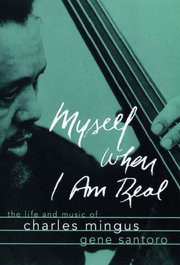
This excerpt from Myself When I Am Real has been reprinted with permission from the author. (C) 2000 Gene Santoro All rights reserved. ISBN: 0-19-509733-5
|
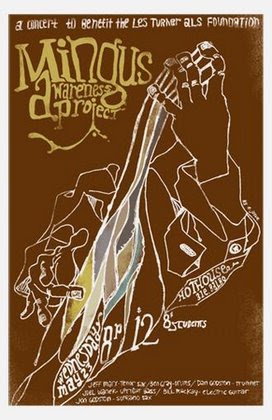
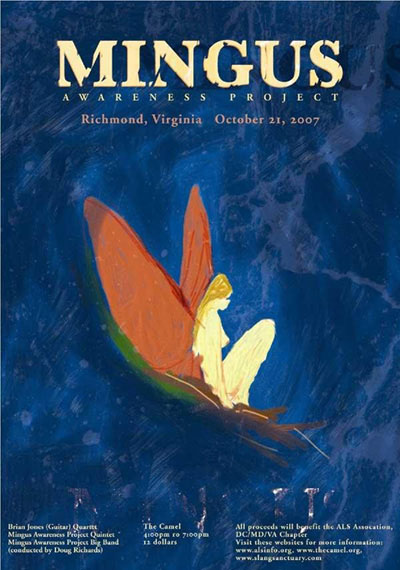
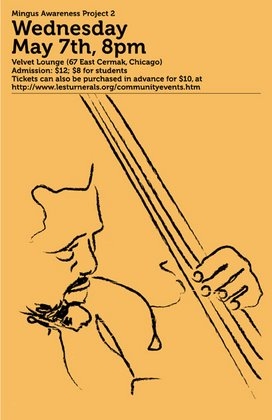
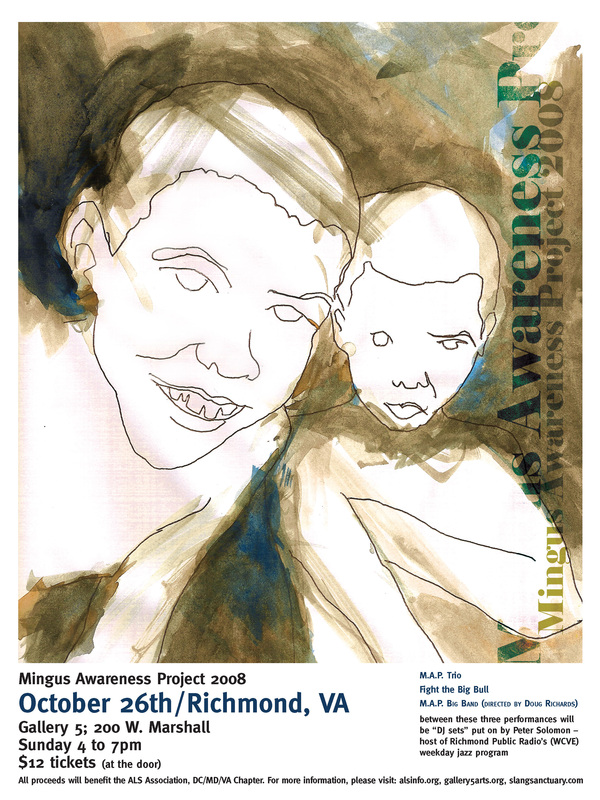
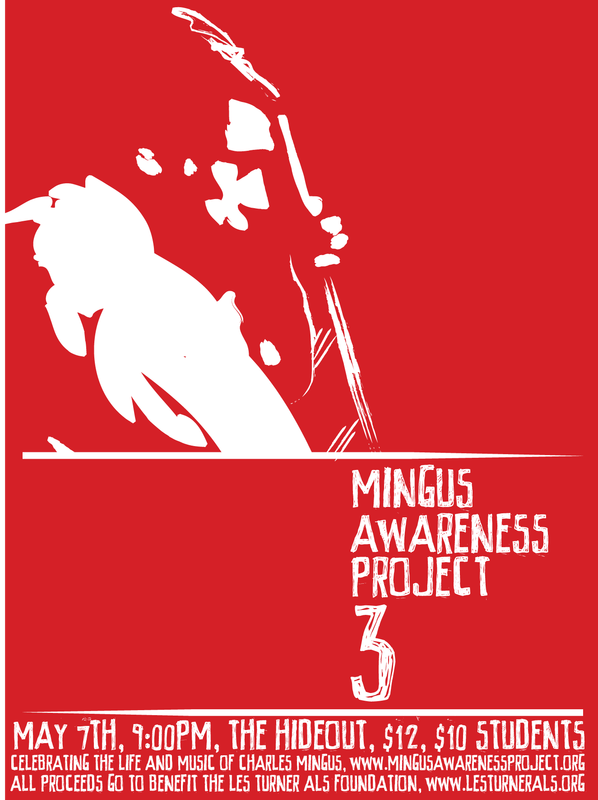
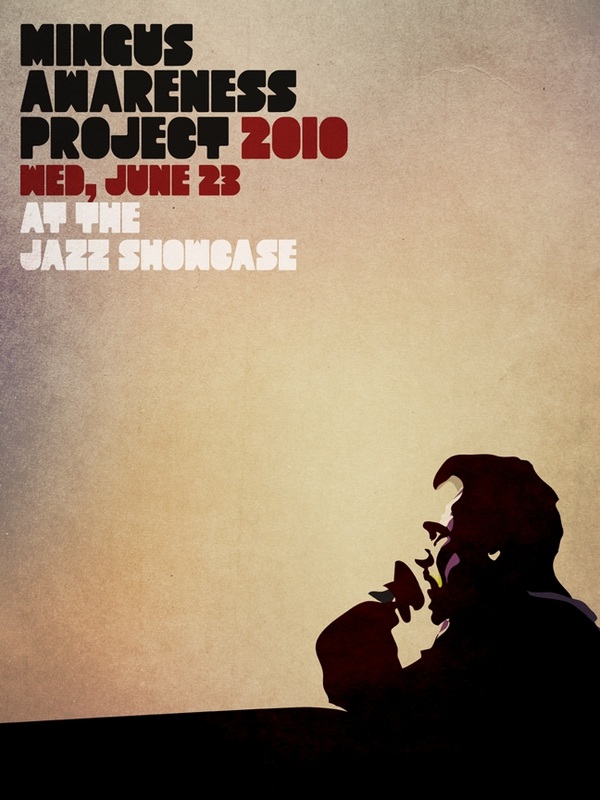
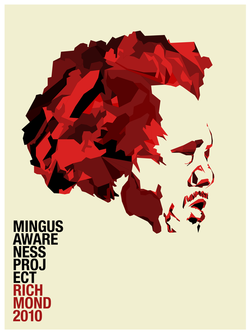
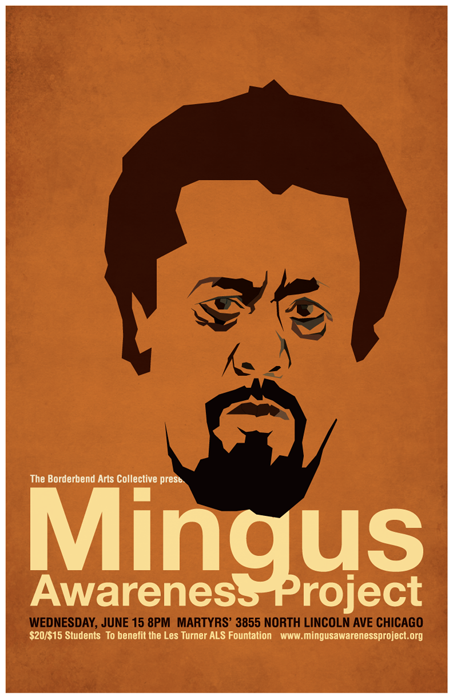
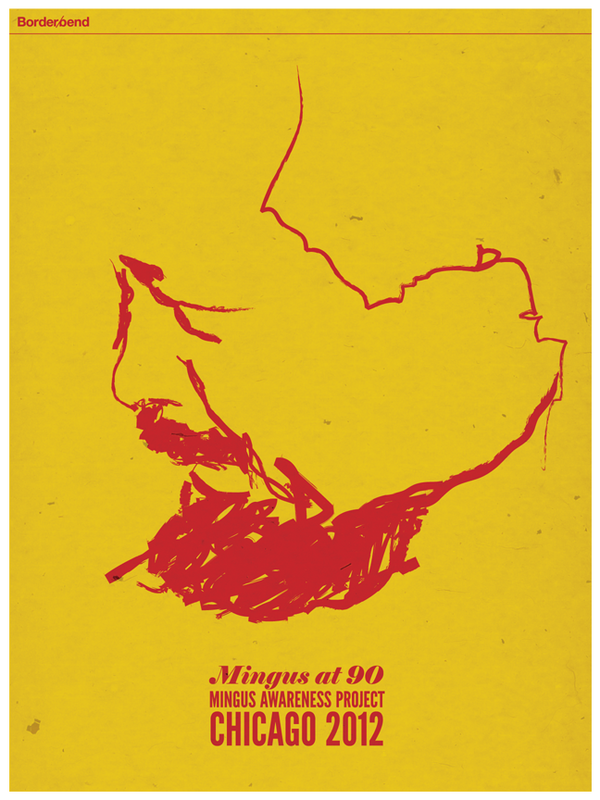
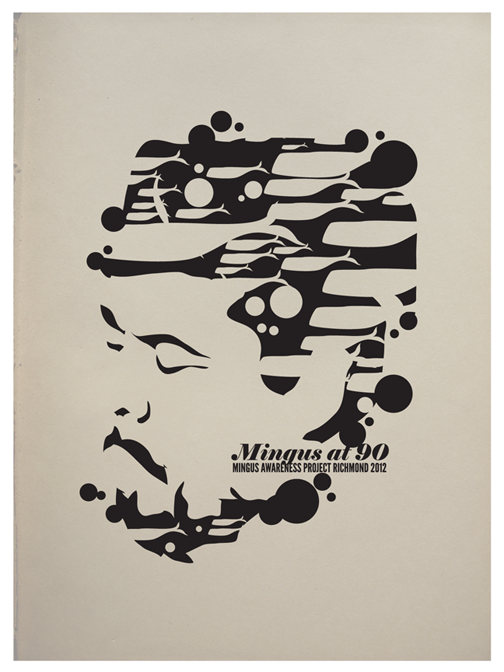
Josh Josue has designed nine Mingus Awareness Project poster images for MAP concerts that have happened in Chicago and Richmond since 2007. Here they are! | | MAP concert at the Camel on October 21, 2007 | |
MAP concert at the Hideout on May 7, 2009 -- | | |
poster image for the MAP concert at Fitzgerald's on May 17, 2012
| |
|